
Bought a dining chair that looked perfect in the showroom but turned out miserable after twenty minutes at the table? Here's what actually determines comfort, before you buy a full set.

A dining chair is easy to judge on looks alone, since most buying decisions happen with a quick showroom sit that lasts under a minute. The real test only shows up during an hour-long dinner or a long work-from-home stint at the table — which is exactly when a beautiful but poorly designed chair reveals itself.
Why Showroom Comfort Doesn't Match Real Comfort
A quick sit tells you almost nothing about how a chair feels after extended use. Firmness that feels supportive for thirty seconds can become uncomfortable pressure after twenty minutes, and a seat angle that seems fine standing up can force poor posture once you're actually eating or working at table height. If possible, sit for several minutes rather than a quick perch, and picture a full family dinner rather than judging on first impression.
Seat Depth and Back Support: The Details That Matter Most
A seat that's too deep forces you to either sit without back support or perch on the front edge, both of which get uncomfortable quickly. Look for a seat depth of roughly 40-45cm, which suits most adults without needing to slouch forward. A chair with even a slight back curve or lumbar contour holds up far better over a long meal than a completely flat, straight backrest, even if the flat design looks sleeker.
Cushioned vs Hard Seats: What Actually Holds Up
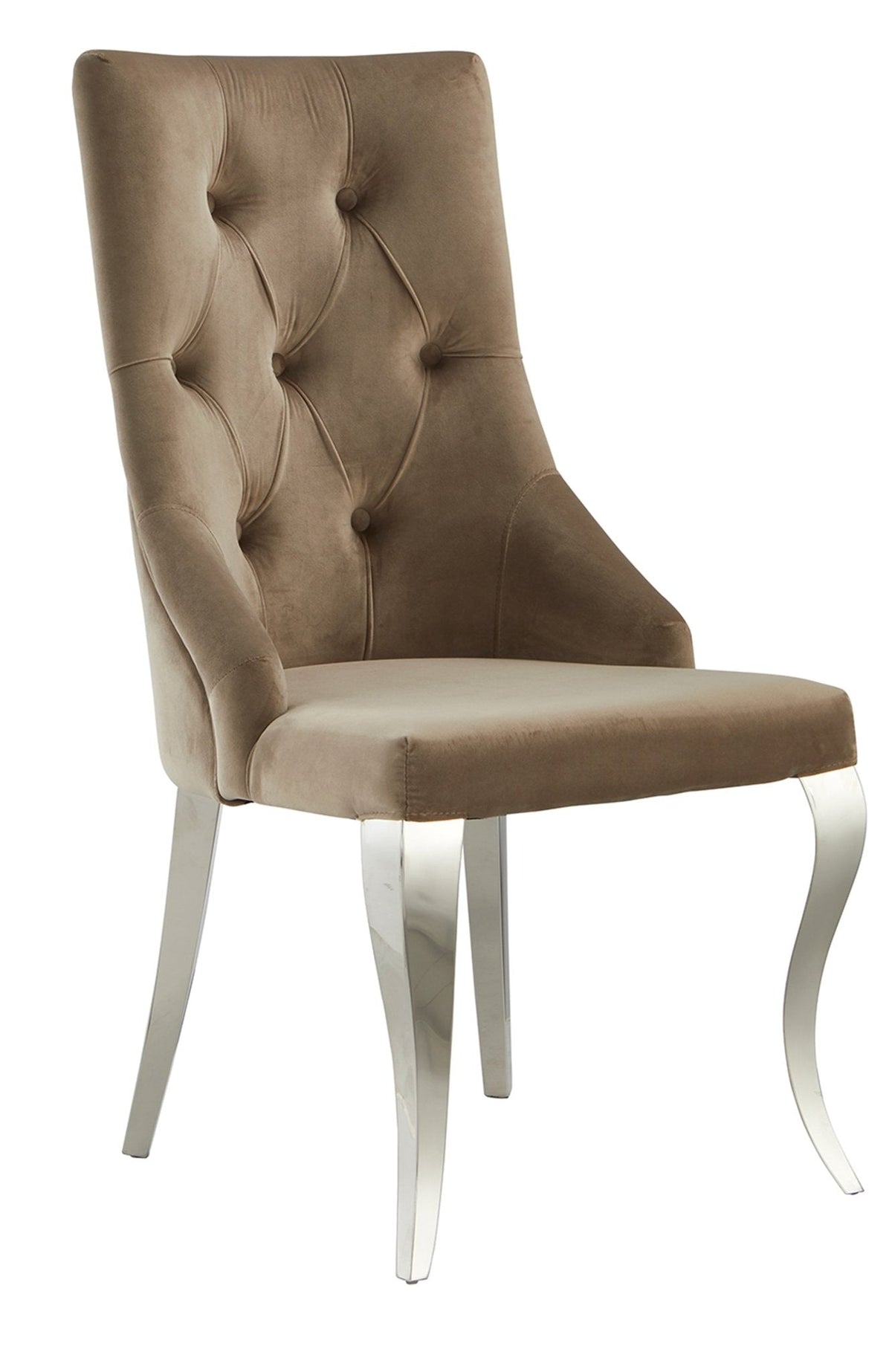
Fully upholstered or cushioned seats are more comfortable for longer sitting, but check the foam quality — a thin layer over a hard base looks cushioned but doesn't perform much differently to a bare timber or moulded seat after extended use. Timber or moulded plastic seats without any cushioning are fine for quick meals but tend to feel harder over time; a removable cushion is a good middle ground if you want the look of a hard seat with the option of comfort.
Chair Height and Table Clearance
Standard dining chairs sit around 45-47cm at the seat, leaving roughly 28-30cm of clearance under a standard 75cm dining table — enough for comfortable knee room without feeling cramped. If you're buying chairs separately from your table, check this clearance measurement specifically rather than assuming standard sizing will match.
Mixing Chair Styles Around One Table
Mixing two complementary chair styles (say, upholstered chairs on the long sides and a simpler design on the ends) can work well and adds visual interest, as long as the seat height and overall scale are consistent across styles. What doesn't work is mixing styles with noticeably different comfort levels, it just means some seats at the table are consistently less desirable than others.
Finding Comfortable Dining Chairs in Dandenong
At Quality Rugs and Furniture, our dining chair range is on the showroom floor in Dandenong so you can properly sit and compare before committing to a full set — far more reliable than judging from a quick perch or a photo.