
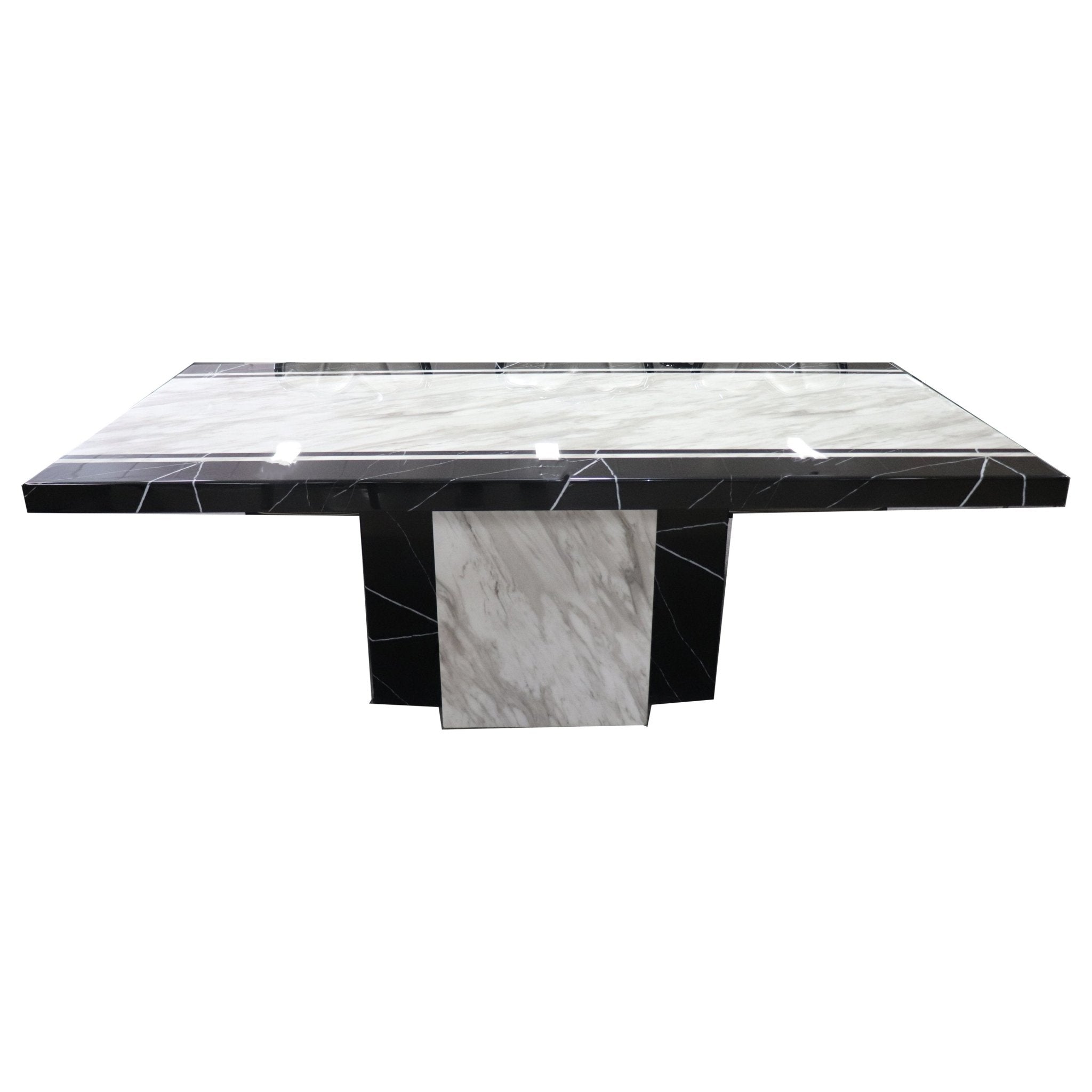
"Is owning a marble dining table just a really stupid idea?" It's a genuine worry for anyone with kids, red wine, or a busy household — here's what actually matters, and when a sintered stone alternative makes more sense.

A marble dining table is one of those purchases people talk themselves in and out of repeatedly. It looks stunning in every photo, but there's a nagging worry about whether it can actually survive a toddler, a spilled glass of red wine, or years of everyday family dinners without looking ruined within a year. The good news: most of the fear is about the wrong risk, and the real one is manageable with the right care.
The Real Risk: Etching, Not Just Staining
Marble is porous and reacts with acid — which means the bigger threat isn't red wine staining the surface, it's anything acidic (lemon juice, vinegar, tomato sauce, even some cleaning products) etching a dull mark into the polish that can't just be wiped away. A sealed marble top resists staining reasonably well for short spills wiped up promptly, but etching from acidic splashes left to sit is the damage that actually shows up over time and frustrates owners.
Sealing and Everyday Care That Actually Works
A quality penetrating sealer applied on delivery (and reapplied every 6-12 months depending on use) significantly reduces staining risk by preventing liquids from soaking into the stone before you can wipe them up. Day to day, the habit that matters most is wiping spills immediately rather than letting them sit — marble that's cared for this way holds up far better than the horror stories suggest. Avoid acidic or abrasive cleaners; a pH-neutral stone cleaner and a soft cloth is all it needs.
Marble vs Sintered Stone: Which Suits Your Household
If you have young kids, a household that eats a lot of acidic foods, or you simply don't want to think about sealing schedules, sintered stone (sometimes marketed as ceramic or ultra-compact surface) gives you the marble look with far higher resistance to both staining and etching, since it's non-porous and far more chemically resistant. Genuine marble still wins on natural veining variation and that authentic cool-to-touch feel, so it comes down to how much maintenance you're realistically willing to keep up with versus wanting a low-maintenance daily surface.
Colour and Finish Choices That Hide Wear Better
Honed (matte) marble finishes show etching and light scratches far less than high-gloss polished marble, since there's no reflective sheen to interrupt. Darker marble or marble with busier veining also disguises minor marks better than plain white or cream stone, where any dull spot stands out clearly against the light background.
Where Marble Still Wins
For households that entertain often but don't have young children constantly at the table, or for a dining table that gets moderate everyday use rather than being a kids' craft-and-dinner surface, genuine marble is absolutely liveable with basic care — the horror stories usually involve either no sealing at all or acidic spills left for hours, not typical use.
Finding the Right Dining Table in Dandenong
At Quality Rugs and Furniture, our dining table range includes genuine marble-top tables as well as sintered stone alternatives, so you can compare both in person before deciding which suits your household. Our Dandenong team can talk through sealing, care and the practical trade-offs between the two — particularly useful if you're weighing this up with kids or a busy dinner table in mind.