
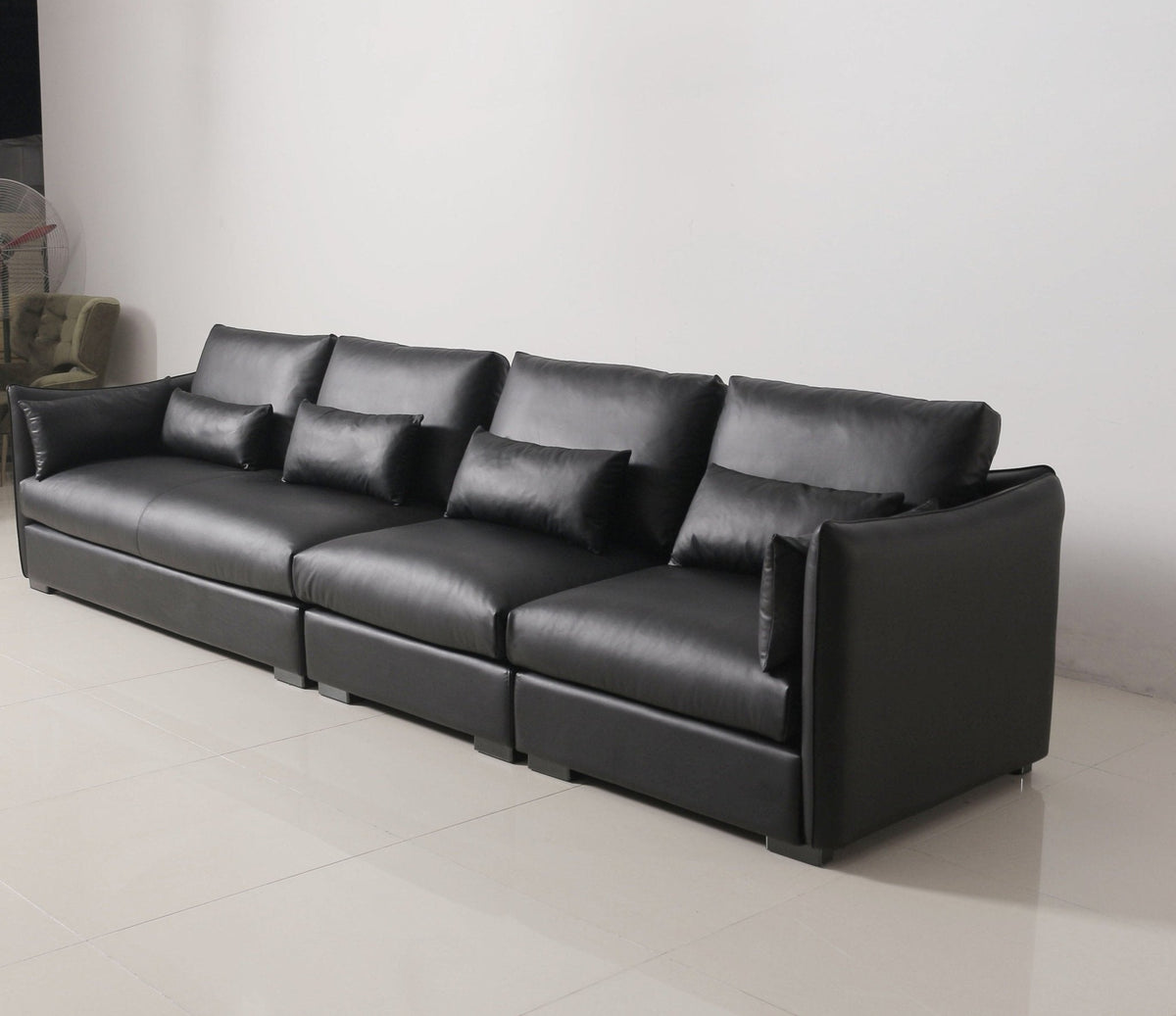
One of the most common furniture complaints online: a "leather" sofa that starts peeling or cracking within a couple of years. Here's how to avoid it before you buy.

Search for leather sofa reviews and you'll quickly find the same complaint repeated across forums and review sites: a sofa that looked and felt like real leather in the showroom started peeling, cracking or flaking within two or three years of normal use. It's a genuinely common and frustrating experience — and almost always traces back to one thing: what was actually sold as "leather" in the first place.
The #1 Leather Sofa Complaint: Why Peeling Happens
Peeling and cracking is almost never a genuine leather problem — it's a bonded leather problem. Bonded leather is made from scraps of real leather fibres glued together and coated with a polyurethane layer printed to look like a leather grain. That surface coating is what delaminates and peels over time, especially with regular use, heat or dry conditions. Genuine leather, properly cared for, doesn't peel this way because there's no printed synthetic layer sitting on top of it.
Genuine Leather vs Bonded Leather: How to Tell Before You Buy
Check the product listing or ask directly for the exact material name — "bonded leather," "leather match," "faux leather" or "PU leather" are all different from genuine or full-grain leather, even when a listing title just says "leather sofa." A quick in-store test: genuine leather has natural grain variation and small imperfections, feels warm and slightly textured, and smells like leather rather than plastic. A perfectly uniform, very smooth surface with no grain variation at all is a sign of a bonded or faux product.
Full-Grain, Top-Grain and Split Leather: What the Grades Mean
Even within genuine leather, grade matters. Full-grain leather uses the entire hide with its natural markings intact and is the most durable and long-lasting, developing a patina rather than wearing out. Top-grain leather is sanded and refinished for a more uniform look, still genuine and durable, just slightly less rugged than full-grain. Split leather (a lower layer of the hide) is genuine but less durable and often used as the base for bonded products — worth knowing if a retailer describes a sofa simply as "leather" without specifying the grade.
Living With Leather: Pets, Kids and Climate
Genuine leather resists pet claws far better than bonded leather, though nothing is fully scratch-proof — a tightly woven fabric may still be the safer choice for a household with an enthusiastic cat. Leather can feel cold in winter and warm-to-sticky in summer compared to fabric, which is worth factoring in if the sofa sits somewhere without heating or cooling. For families with young kids, a slightly textured or pebbled-grain leather hides scuffs better than a very smooth, glossy finish.
Caring for Leather So It Lasts
Genuine leather needs conditioning every 6-12 months to stop it drying out and cracking — the same failure mode people blame on "cheap leather" is often just an unconditioned genuine hide. Keep it out of direct, constant sun exposure, wipe spills promptly, and avoid harsh cleaning products. A well cared-for genuine leather sofa should easily outlast most fabric equivalents.
Finding a Genuine Leather Sofa in Dandenong
At Quality Rugs and Furniture, our leather sofa range is clearly labelled by leather type, and our Dandenong showroom team can talk you through the difference between genuine and bonded leather in person — including letting you feel the grain and finish for yourself before you commit.