
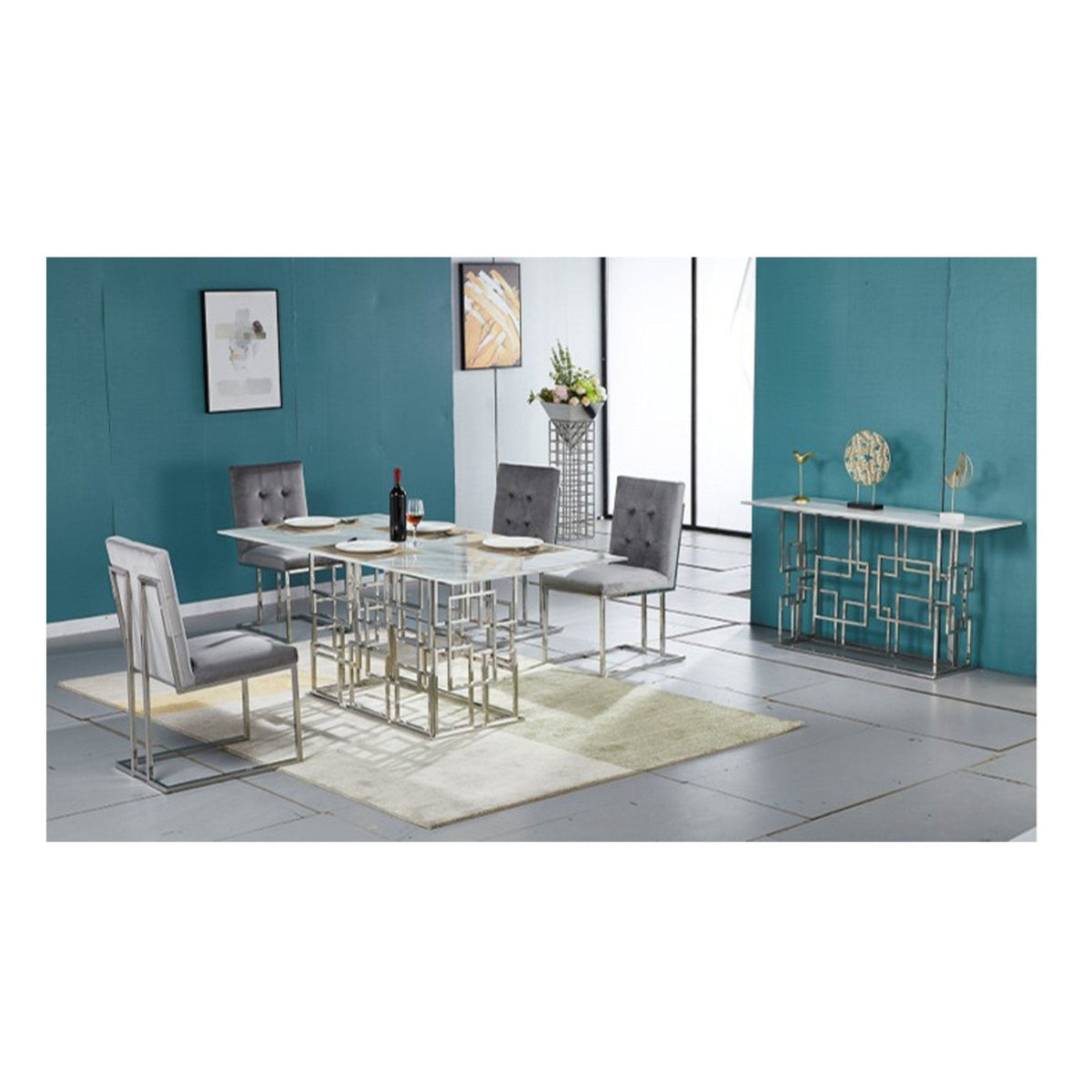
A common worry that comes up after people commit to a marble dining table: will one spilled glass of wine or a squeeze of lemon leave a permanent mark? It's a fair question, and the answer depends on a few things most people aren't told at the point of sale.

Marble is a genuinely beautiful material for a marble dining table, but it's also porous and reactive to acid in a way that engineered stone or laminate simply isn't. Understanding what actually causes damage — rather than being generally nervous about the whole table — makes it much easier to enjoy day to day.
Etching vs Staining: They're Different Problems
Etching is a dull mark left by acidic liquids (wine, citrus, vinegar, tomato sauce) reacting with the marble's surface — it's a chemical change, not a stain, so it can't simply be wiped or cleaned away once it's happened. Staining is different: it's when a liquid soaks into the porous surface and darkens it, which sealing helps prevent. Knowing the difference matters because the prevention for each is slightly different.
Sealing Is Not Optional, It's Maintenance
A quality marble sealant reduces (though doesn't eliminate) both etching and staining risk, but it wears off over time with normal use and needs reapplying roughly every 6-12 months depending on how often the table is used. This single habit prevents more damage than almost anything else.
Wipe Spills Immediately, Every Time
The amount of etching or staining damage is directly related to how long a liquid sits on the surface. Acidic spills wiped up within a minute or two rarely leave a visible mark; the same spill left for twenty minutes during a long dinner almost always will. It's worth building the habit of a quick wipe the moment something spills, rather than waiting until the meal is over.
Use Placemats and Coasters as Standard Practice
This sounds obvious, but it's the single most effective form of prevention. Placemats under plates and coasters under glasses stop the vast majority of everyday etching and staining before it ever touches the marble, and they don't need to look like they're protecting anything — plenty of placemat styles complement a marble table rather than hiding it.
Choose the Right Cleaning Products
Standard kitchen cleaners, vinegar-based solutions and anything acidic will actively etch marble on contact. A pH-neutral stone cleaner (or simply warm water and a soft cloth for daily wiping) is the only safe everyday option.
Finding a Marble Dining Table Built for Real Life
At Quality Rugs and Furniture, our dining table range includes genuine marble-top styles alongside more forgiving sintered stone alternatives for households wanting the marble look with less maintenance. Visit our Dandenong showroom and our team can walk you through the difference before you buy.